
Capabilities
Two lines, box build, one continuous flow.
From bare circuit board to finished, boxed product without leaving our floor.
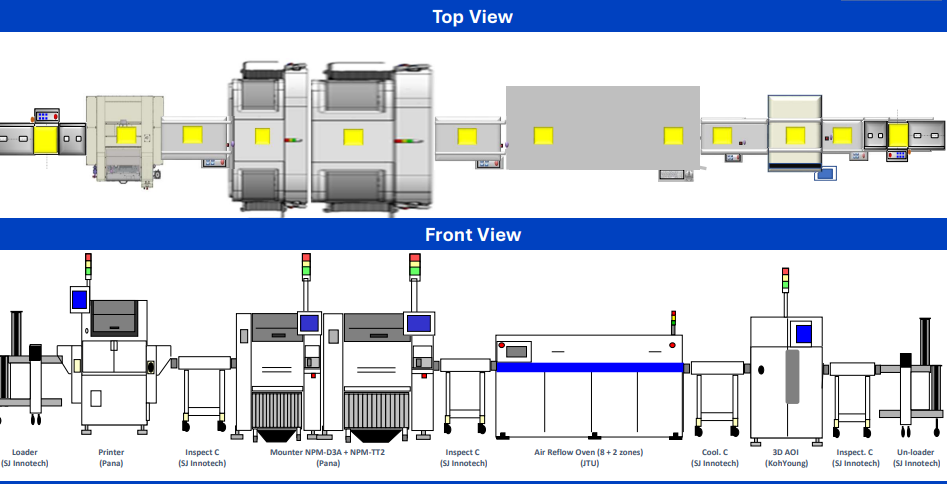
In plain terms: a bare board is loaded in, solder paste is printed onto it, machines place the components, an oven melts the solder to fix them in place, cameras check every joint in 3D, and the finished board comes out the other end.
Surface-Mount Technology (SMT)
Surface-mount technology places components directly onto the face of the board — the method behind almost every modern electronic device. Our line is fully automated and rated at 120,000 component placements per hour.
- Panasonic NPM GP/L printer — lays down solder paste in the same exact pattern on every board
- Panasonic NPM-D3A high-speed placer — 96,000 components per hour, two lanes, near-instant board changeover
- Panasonic NPM-TT2 flexible placer — handles oddly shaped parts and very closely spaced pins
- Places components as small as 01005 (0.4 × 0.2 mm) and complex BGA/QFN chip packages
- Boards from 50×50 up to 510×590 mm
- JTU lead-free reflow oven — melts the solder to lock parts in place, across 8 heating and 2 cooling zones
- KohYoung Zenith Alpha HS — in-line 3D automated optical inspection (AOI)
Through-Hole Assembly (Manual Insertion)
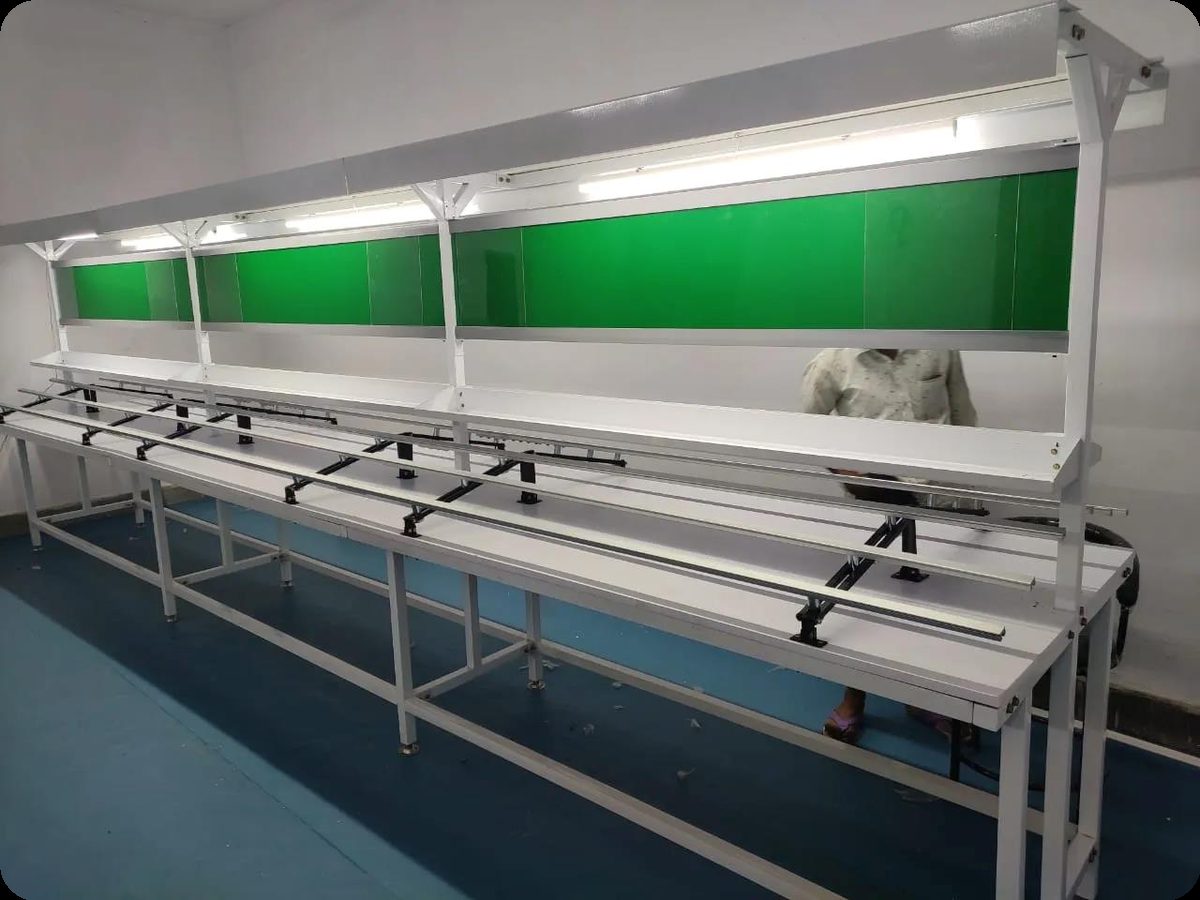
Some parts — connectors, transformers, power components — need more mechanical strength than a surface joint gives. Their legs pass through holes in the board and are soldered on the far side. A 30 ft insertion conveyor feeds our dual-wave soldering machine.
- 30 ft conveyor for controlled, sequential hand insertion
- Dual-wave soldering — the board passes over two waves of molten solder for stronger, more reliable joints
- No-clean flux, so no residue has to be washed off the finished board
- Runs alongside the surface-mount line for boards that need both methods
Box Build & Final Assembly
“Box build” means everything after the board itself: the finished circuit board — the PCBA, or printed circuit board assembly — fitted into its enclosure with wiring and displays, then packed ready for your customer.
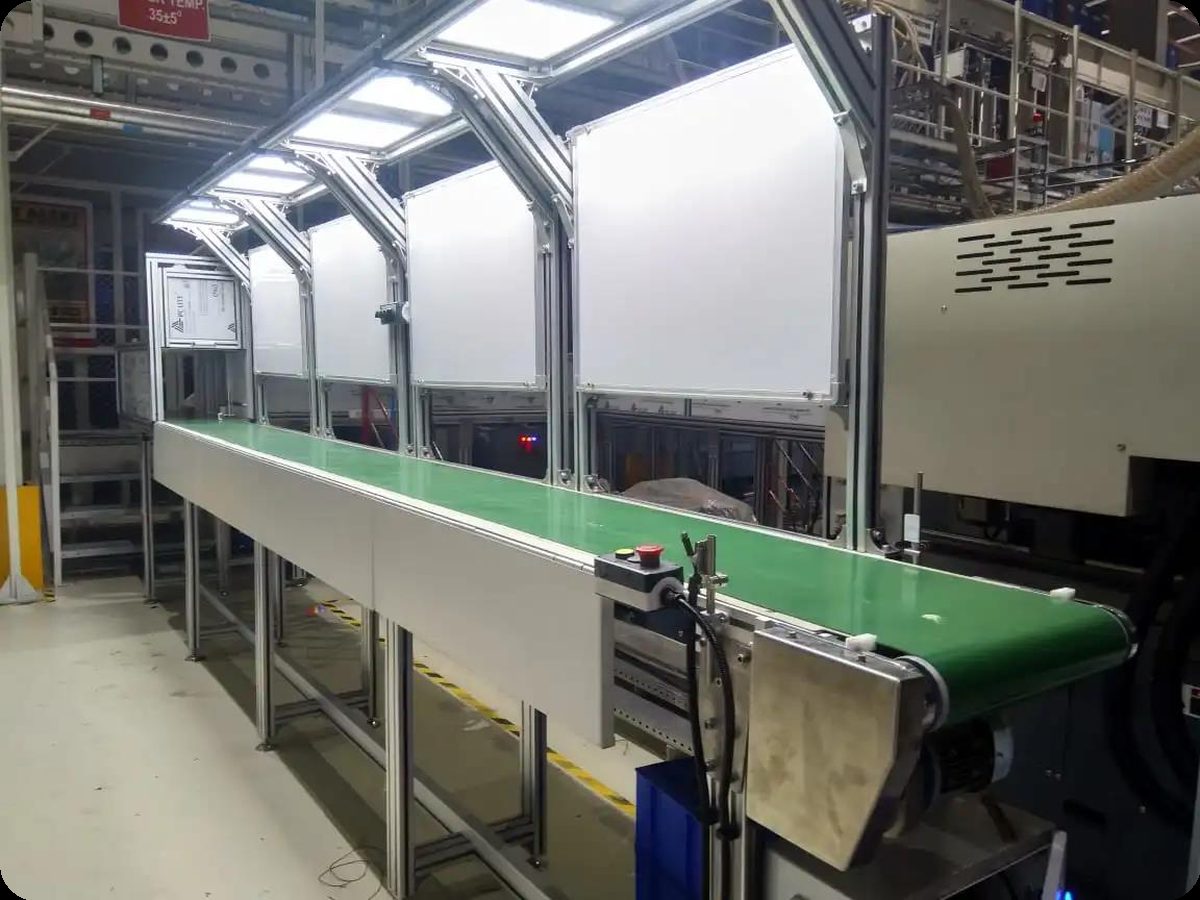
- 30 ft assembly and touch-up conveyor
- 0.9 m outfeed conveyor that brings assemblies back to room temperature gradually
- Fitting circuit boards together with cabling, enclosures and sub-assemblies
- Final assembly through to packaging and dispatch
The environment it runs in
HEPA-Filtered Clean Room
High-efficiency particulate air filters, plus air pressure kept higher than outside, hold dust out and conditions steady.
Air Shower Entry
Everyone passes through a jet of filtered air on the way in, so dust and lint stay off the production floor.
Static-Safe (ESD) Throughout
Flooring, workstations, grounding and clothing stop static electricity — which can silently damage a chip — from ever building up.
Controlled Ventilation
Solder fumes are extracted and humidity is held steady, so soldering behaves the same way every shift.
What we can take off your plate
Engage us for one step or all six — most customers start with assembly and grow into the rest.